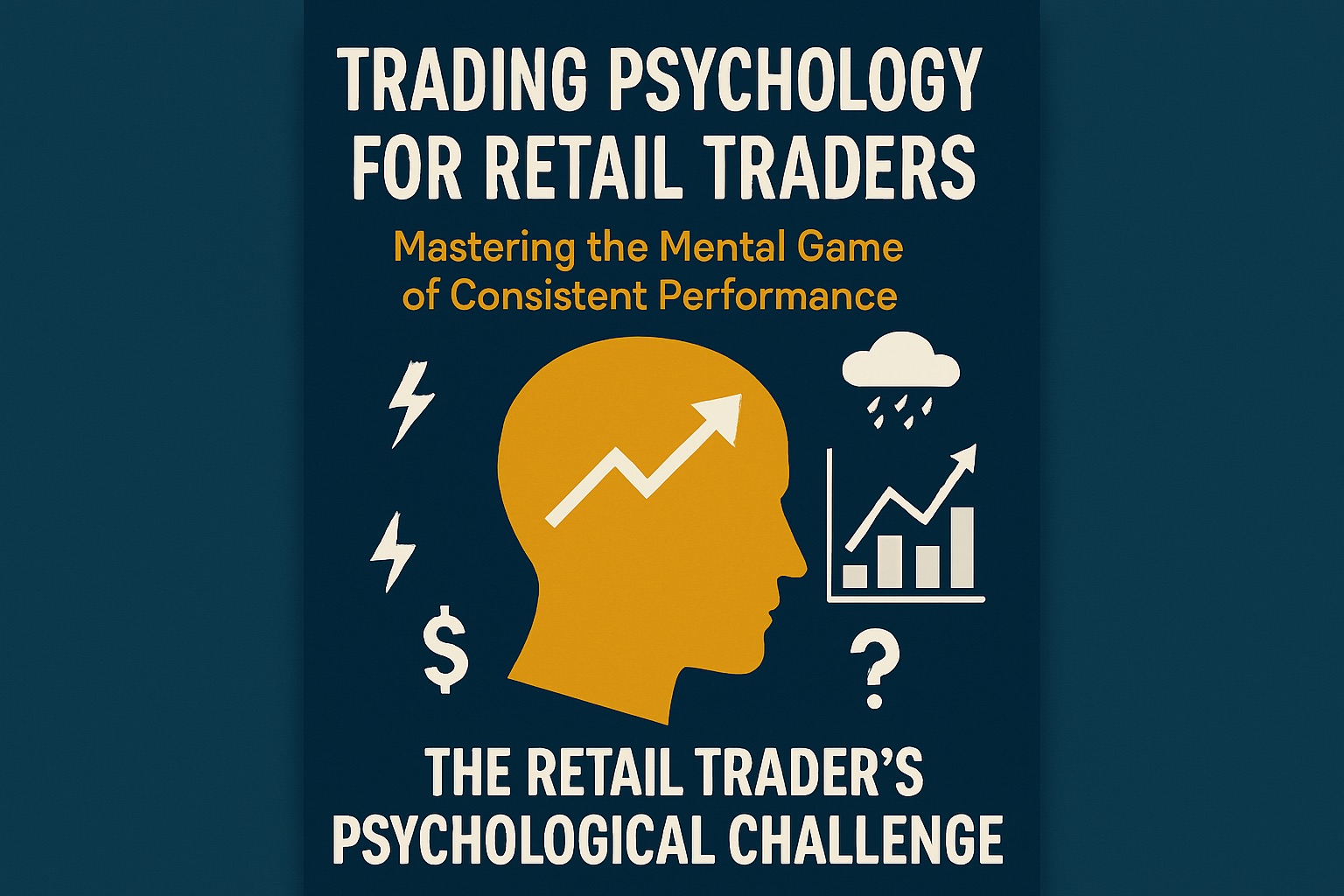
Trading Psychology for Retail Traders: Mastering the Mental Game of Consistent Performance
Successful trading is not determined solely by strategy, technical analysis, or market knowledge. For most retail traders, the greatest challenge lies in managing emotions, maintaining discipline, and making rational decisions under pressure.
While markets reward consistency and objectivity, human psychology often pushes traders toward impulsive behavior. Fear, greed, frustration, overconfidence, and the fear of missing out (FOMO) can quickly undermine even the most effective trading systems.
The Retail Trader's Psychological Challenge
Retail traders face unique psychological obstacles that professional traders are often better equipped to manage. Many trade after long workdays, operate without structured risk controls, and rely heavily on personal capital. As a result, emotional decision-making can become a significant barrier to long-term profitability.
Unlike institutional traders who operate within strict frameworks, retail participants must independently manage risk, maintain discipline, and control emotional responses in highly volatile environments.
Why Trading Psychology Matters
The difference between profitable and unprofitable traders is rarely access to information. More often, it is the ability to execute a strategy consistently regardless of market conditions.
Strong trading psychology helps traders:
Follow predefined trading plans.
Manage risk objectively.
Avoid emotional reactions to losses.
Maintain discipline during winning streaks.
Navigate uncertainty with confidence.
Focus on long-term performance rather than short-term outcomes.
Without psychological discipline, even the most sophisticated trading strategy can fail.
Common Psychological Mistakes Retail Traders Make
Many retail traders struggle with recurring behavioral patterns that negatively impact performance, including:
Revenge Trading
Attempting to recover losses quickly often leads to impulsive decisions, increased risk exposure, and larger drawdowns.
Overtrading During Winning Streaks
Success can create overconfidence, encouraging traders to abandon risk management principles and take unnecessary positions.
Holding Losing Trades Too Long
Hope is not a trading strategy. Refusing to accept losses can transform manageable setbacks into significant account damage.
Averaging Down on Losing Positions
Adding capital to losing trades without a clear risk framework increases exposure and can accelerate losses during adverse market movements.
Taking Profits Too Early
Many traders are comfortable accepting small gains but struggle to allow winning positions to reach their full potential.
Excessive Leverage
Leverage magnifies both profits and losses. When used improperly, it can create emotional stress that leads to poor decision-making.
Fear of Missing Out (FOMO)
Chasing market moves after they have already occurred often results in poor entries, unfavorable risk-reward ratios, and unnecessary losses.
The Importance of Mental Risk Management
Risk management is not only a financial discipline—it is a psychological one.
Professional traders understand that preserving capital is the first priority. Effective psychological controls include:
Defining risk before entering a trade.
Using predetermined stop-loss levels.
Maintaining consistent position sizing.
Limiting daily and weekly losses.
Avoiding emotionally driven decisions.
Following structured trading routines.
These safeguards reduce emotional volatility and improve decision quality over time.
Managing Your Mental State
Trading performance is directly influenced by mental and emotional condition.
Factors such as fatigue, stress, anxiety, and frustration can significantly impair judgment. Retail traders who trade while mentally exhausted are more likely to deviate from their plans and make impulsive decisions.
Establishing routines before, during, and after trading sessions can help maintain focus, emotional control, and consistency.
Navigating Losing Streaks
Every trader experiences periods of underperformance. Losing streaks are a natural part of trading and do not necessarily indicate a flawed strategy.
The key differentiator is resilience.
Successful traders respond to losing periods by reviewing data, reducing risk where appropriate, and maintaining adherence to their process. Unsuccessful traders often react emotionally, increasing risk and abandoning discipline in an attempt to recover losses quickly.
Five Mindset Shifts for Long-Term Success
Professional traders typically adopt several critical mindset shifts:
Focus on systems, not individual wins.
Measure success by process, not profits.
View losses as part of the learning curve.
Accept uncertainty rather than attempting to control outcomes.
Replace ego with humility and continuous improvement.
Final Thoughts
The markets are designed to test patience, discipline, and emotional control. Technical skills may help identify opportunities, but psychological mastery determines whether traders can consistently capitalize on them.
Long-term success is achieved not by predicting every market move, but by developing the discipline to execute a proven process repeatedly and objectively.
Master your emotions, trust your system, and focus on consistency. When psychology and strategy work together, sustainable trading performance becomes possible.