Nepal Investment Outlook 2026: Why Smart Money Is Watching Nepal's Next Growth Story
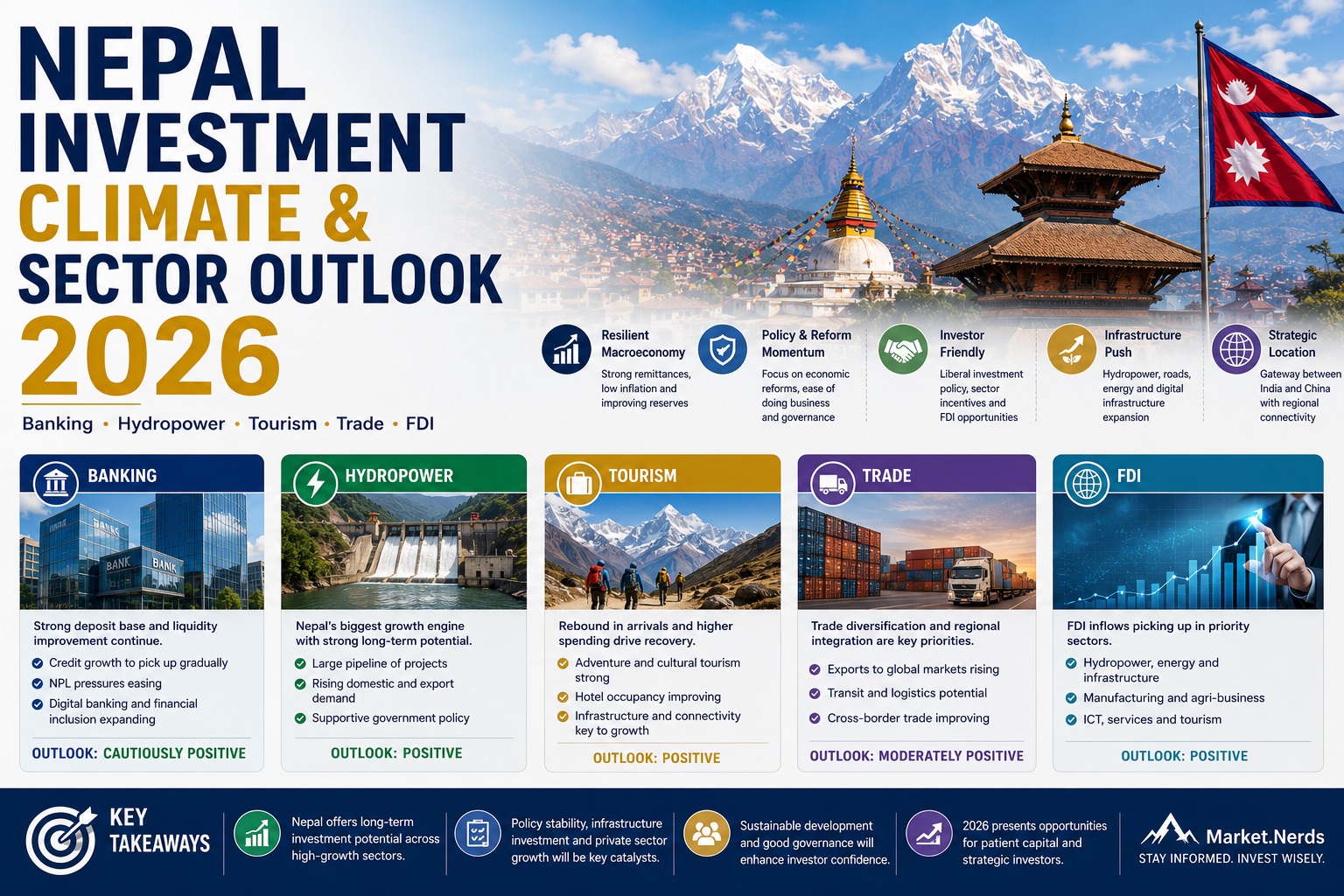
For years, Nepal has been viewed primarily through the lens of tourism, remittances, and economic challenges. Yet beneath the surface, a different story is beginning to emerge—one of improving macroeconomic stability, growing infrastructure investment, expanding energy exports, and renewed investor interest.
As Nepal enters 2026, the country's investment landscape is transitioning from fragility toward opportunity. While structural risks remain, several key sectors are demonstrating the potential to deliver attractive long-term returns for investors willing to take a disciplined and informed approach.
A Stronger Macro Foundation
Nepal's economy has shown notable resilience over the past two years. Foreign exchange reserves have strengthened significantly, inflation has moderated, and monetary conditions have become more supportive of economic growth.
The country's reserve position now provides one of the strongest external buffers seen in nearly a decade, helping reduce concerns about short-term balance-of-payments pressures. While Nepal continues to face a large trade deficit, steady remittance inflows and a recovering tourism sector have helped support economic stability.
For investors, this improving macro backdrop creates a more favorable environment than many expected following the economic disruptions of recent years.
Banking Sector: Recovery After a Difficult Cycle
Nepal's banking industry has endured a challenging period marked by liquidity shortages, rising non-performing loans, and slowing credit growth. However, early signs of stabilization are becoming increasingly visible.
Deposit growth has improved, liquidity conditions have eased, and profitability metrics are gradually recovering. While asset quality remains an area to monitor closely, stronger commercial banks appear well-positioned to benefit from a normalizing credit cycle.
For investors seeking exposure to Nepal's domestic economy, banking remains one of the most important sectors to watch as financial conditions continue to improve.
Hydropower: Nepal's Most Significant Long-Term Opportunity
No sector better represents Nepal's future economic potential than hydropower.
With an estimated economic generation capacity exceeding 42,000 MW and only a fraction currently developed, Nepal possesses one of the most underutilized renewable energy resources in Asia. Growing electricity demand from neighboring India and Bangladesh is creating a substantial export opportunity that could transform the country's economic outlook over the next decade.
Cross-border power agreements, expanding transmission infrastructure, and a growing pipeline of projects are positioning hydropower as a strategic pillar of Nepal's long-term growth story.
For patient investors with multi-year horizons, the sector offers one of the clearest structural investment themes in the market.
Tourism Continues Its Recovery
Tourism remains one of Nepal's most valuable economic assets. Following the severe disruption caused by the pandemic, visitor arrivals have recovered strongly and are approaching pre-pandemic levels.
Beyond traditional trekking and mountaineering tourism, Nepal is increasingly benefiting from growth in wellness travel, cultural tourism, adventure experiences, and eco-tourism. Improved international connectivity and renewed global interest in Himalayan destinations are supporting this recovery.
While infrastructure limitations remain a challenge, the long-term outlook for tourism remains constructive as Nepal continues to strengthen its global tourism brand.
Foreign Direct Investment Is Gradually Improving
Historically, foreign investors have been cautious toward Nepal due to political uncertainty, regulatory complexity, and infrastructure constraints.
However, recent reforms aimed at improving the investment environment are beginning to show results. Foreign direct investment inflows remain modest compared to regional peers, but momentum is gradually improving.
Hydropower, tourism, digital services, and selected infrastructure projects continue to attract the strongest investor interest, reflecting confidence in Nepal's long-term development potential.
The Investment Case for Nepal
Nepal is not a market suited for short-term speculation. It remains a frontier economy with meaningful structural challenges, including governance concerns, trade imbalances, and dependence on remittance flows.
However, these risks are increasingly balanced by improving macroeconomic conditions, rising infrastructure investment, and attractive growth opportunities across several sectors.
For investors willing to focus on fundamentals rather than headlines, Nepal offers exposure to a market that remains under-researched, under-owned, and potentially undervalued.
The most compelling opportunities in 2026 appear concentrated in three areas:
Banking sector recovery
Hydropower expansion and energy exports
Tourism-driven economic growth
As the country continues its transition toward greater economic maturity, informed investors may find that Nepal's next chapter presents opportunities that many global markets have already priced in.
Final Thoughts
Nepal's investment story is still developing, but the direction of travel is becoming increasingly clear. Stronger reserves, improving financial conditions, expanding energy infrastructure, and recovering tourism are creating a more constructive investment environment than at any point in recent years.
The path forward will not be without challenges. Yet for investors focused on long-term value creation rather than short-term market noise, Nepal remains one of South Asia's most intriguing frontier market opportunities.
At Market.Nerds, our view remains simple: the greatest opportunities often emerge where perception lags reality—and Nepal may be one of those markets in 2026.